
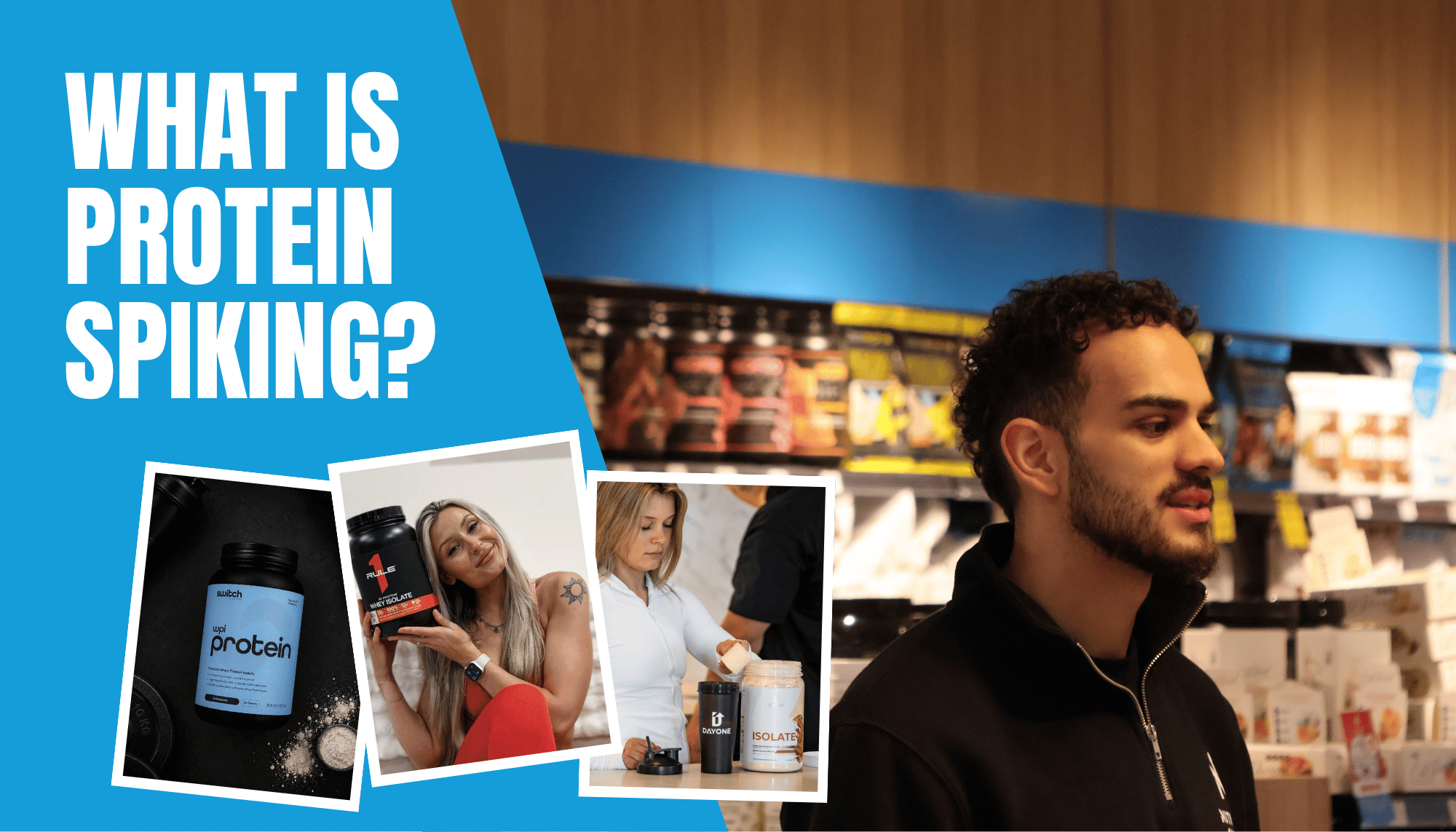
What is Protein Spiking and What Does it Mean for You?
There’s a controversial practice that’s been quietly happening in the supplement industry for years, and a lot of people buying protein powder have no idea it exists. It doesn’t show up on the label in plain language, it’s hard to spot without knowing what to look for, and it means some customers are paying for protein they’re not actually getting.
It's called protein spiking, and it’s worth understanding before you buy your next tub.
What’s actually going on with protein powders
Protein spiking is also called nitrogen spiking or amino spiking. Here’s the breakdown.
Protein content in supplements is usually measured by testing nitrogen levels. That’s because protein molecules contain nitrogen, so the test uses nitrogen as a proxy for protein. If everyone was playing fair that would be fine. The trouble is, some cheap, non-essential amino acids like glycine, taurine, and creatine also contain nitrogen. They’re not quality protein sources, but they register the same way in the test.
Some manufacturers add these cheap fillers to their powder specifically to inflate the nitrogen reading. The label says 25g of protein per serve, but the actual high-quality, muscle-supporting protein might be 18–20g. The rest is filler.
It’s not technically illegal in most markets, because the nitrogen content claim is often accurate. But it is misleading. You’re paying for something that isn't there.
The practice became a big controversy in the supplement industry around 2014, when lawsuits were filed against multiple brands. It led to calls for clearer labelling and greater transparency. That’s a big part of why reputable brands today are much more upfront about their full amino acid profiles.
Brands that don’t spike their protein
To get the inside word on the trustworthy brands doing protein the right way, we had a chat with Nutrition Capital co-owner and industry veteran, Jose. Here’s what he had to say.
“Some brands that will show a full amino acid profile would be brands like Rule 1, True Protein, International Protein, Day One, just to name a couple. It's actually becoming quite common these days, but they don't all do it.
“One that I would like to highlight for publishing third-party breakdowns is Day One Isolate. So they are one that actually puts a QR code on their packaging, so that you know that each batch is third-party tested and you can see the results for yourself. They’re leaning into that integrity proved through third party testing on all of their products as their main point of difference. Really, really cool. And the price point on that is actually really good. It's $89.95 for a kilo, whereas we're now seeing 900 grams, 700 grams for about $120 with a lot of brands. So definitely worth considering for someone looking for quality and a good price as well.”
How to Spot It Yourself
Knowing what protein spiking is gives you most of what you need to avoid it. Here’s what to actually look for when you’re reading a label.
Check the ingredients list for free-form amino acids. If you see glycine, taurine, creatine, glutamine, or arginine listed separately in a protein powder, rather than as part of a full protein source, that’s a signal. These ingredients have their place in other supplements, but they have no business being in a straight protein powder unless it’s to bulk out the nitrogen count.
Look for a full amino acid profile. Reputable brands publish the complete amino acid breakdown; all the essential and non-essential aminos, and in what quantities. If that information isn’t on the label or the brand’s website, ask yourself why.
Be sceptical of unusually cheap protein. If a 2kg tub of whey isolate is significantly cheaper than comparable products, there’s usually a reason. Isolate is expensive to produce. Brands that cut the price dramatically often cut something else too.
Third-party testing is a good sign. Some brands submit their products to independent labs that verify the protein content matches the label claim. It’s not universal, but when a brand does it, they usually say so prominently because it’s a genuine point of difference.
Right here in Melbourne we have HASTA, a lab that specialises in testing sports supplements. They’re well-resourced and use the latest science to make sure that protein supplements and lots of other products contain exactly what they say they do, so if you see these certifications on a product’s packaging, that’s a great sign that you can trust their claims:
Source: hasta.org.au
“Proprietary blend” is a red flag. This language is used across the supplement industry to avoid disclosing exact ingredient amounts. In a protein powder specifically, there’s little reason to hide what’s in it unless the breakdown wouldn’t look good.
It Comes Down to Knowing What to Look For
Protein spiking has actually declined, from the worst it got about a decade ago. Greater consumer awareness and industry pressure have pushed most serious brands toward transparency. But the practice hasn’t disappeared entirely, and in a market where prices are rising and budget products are tempting, it’s worth being a bit more careful about what you’re buying. The current resurgence of protein and creatine products hitting the market, means there’s a danger the practice could make a comeback.
Luckily, it’s easy to avoid if you pay attention. Check the ingredient list, look for a full amino acid breakdown, and favour brands that are upfront about what's in the tub. If a deal looks too good, it probably is.
If you’re ever unsure, come in and ask. That’s what the team here is for! Not a sales pitch, just straight answers on what’s actually worth your money.
Nutrition Capital stocks a range of tested, transparent protein products. Browse online or come into the store for a personalised recommendation.